
Introduction
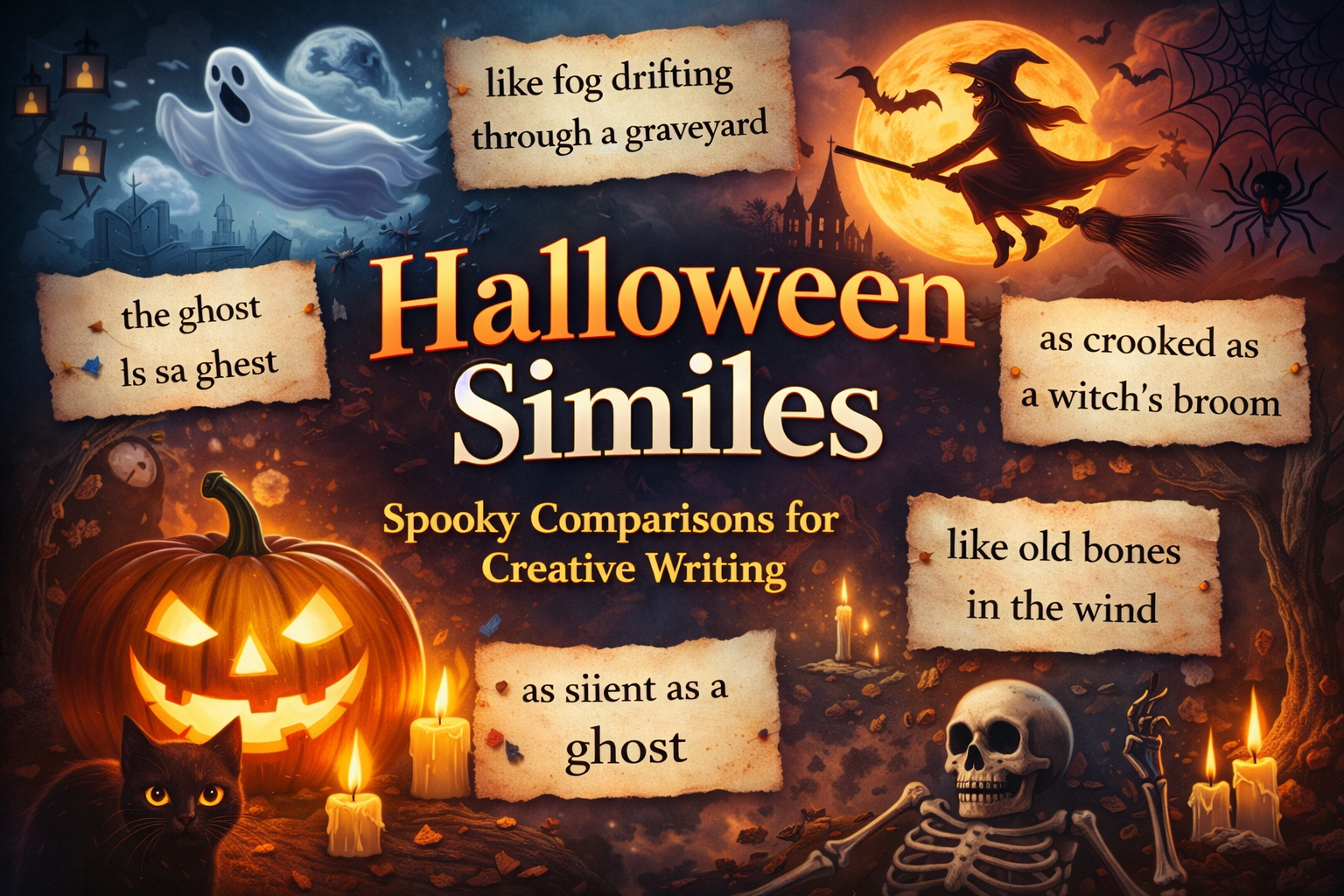
Halloween is a time filled with pumpkins, ghosts, costumes, and spooky stories. Writers, teachers, and students often look for creative ways to describe the eerie atmosphere that surrounds this festive holiday. One great tool for doing this is similes—comparisons that use words like “as” or “like” to paint vivid pictures in the reader’s mind. Halloween similes can transform ordinary sentences into exciting, imaginative descriptions that capture the mysterious spirit of the season.
Whether you’re writing a Halloween story, poem, classroom assignment, or social media post, similes help add personality and emotion to your words. From ghosts floating “like mist in the night” to pumpkins glowing “as bright as lanterns,” these comparisons make Halloween scenes come alive. In this article, you’ll discover what Halloween similes are, why they’re useful, examples you can use, and tips for creating your own spooky comparisons.
What Are Halloween Similes?
Before diving into examples, it helps to understand what similes actually are. A simile is a figure of speech that compares two different things using the words “like” or “as.” These comparisons help readers visualize something more clearly.
When applied to Halloween themes, Halloween similes describe spooky characters, eerie environments, or festive decorations using creative comparisons. Instead of simply saying “the night was dark,” a writer might say “the night was as dark as a haunted cave.”
Here are a few simple examples:
-
The ghost floated like fog drifting through a graveyard.
-
The pumpkin glowed as bright as a lantern in the dark.
-
The witch’s laugh echoed like thunder in a storm.
-
The skeleton rattled like dry leaves in the wind.
These comparisons add color and imagination to writing. They make descriptions more vivid and memorable.
Halloween similes are commonly used in:
-
Children’s Halloween stories
-
Poems and rhymes
-
Creative writing assignments
-
Party invitations and decorations
-
Social media captions
Because Halloween already has a mysterious and playful tone, similes fit perfectly with the holiday’s storytelling traditions.
Popular Halloween Similes and Their Meanings
Many spooky comparisons have become popular because they capture the spirit of Halloween so well. These Halloween similes often involve classic symbols like ghosts, bats, witches, and pumpkins.
Here are some commonly used ones and what they suggest:
As quiet as a ghost
This simile describes something extremely silent or stealthy. It’s often used in spooky stories when a character moves quietly through a dark place.
As pale as a ghost
Used to describe someone who looks frightened or shocked.
As black as a witch’s hat
A creative way to describe deep darkness, especially on Halloween night.
Like a bat out of a cave
This comparison suggests something moving very quickly or suddenly.
5. As crooked as a witch’s broom
This simile describes something bent, twisted, or uneven.
Like pumpkins glowing in the night
Used to describe warm or flickering lights.
Writers love these comparisons because they instantly create a Halloween mood. Readers can easily picture the scene, whether it’s a haunted house or a pumpkin-lit porch.
Using familiar Halloween symbols makes similes more relatable and fun.
Halloween Similes for Creative Writing
If you’re writing a spooky story or poem, adding descriptive comparisons can make the scene far more engaging. Creative Halloween similes help readers imagine the sights, sounds, and feelings of a haunted setting.
Here are some imaginative examples you can use:
-
The wind howled like a pack of wolves in the night.
-
The haunted house stood as silent as a forgotten graveyard.
-
The moon hung in the sky like a glowing pumpkin.
-
The fog crept through the street like ghostly fingers.
-
The witch’s cloak fluttered like a shadow in the wind.
-
The skeleton’s bones clattered like old wooden sticks.
These similes create strong images that pull readers into the story.
For example:
The fog rolled across the cemetery like a blanket of ghosts, and the moon glowed like a pale lantern above the crooked trees.
With just a few comparisons, the scene suddenly feels mysterious and atmospheric.
When writing Halloween stories, try focusing on sensory details—how things look, sound, and feel. Then compare them to something spooky or familiar.
Halloween Similes for Kids and Classroom Activities
Teachers often use Halloween similes to help students learn figurative language in a fun and engaging way. Because Halloween themes are playful and imaginative, kids enjoy creating their own spooky comparisons.
Here are some simple similes that work well for younger learners:
-
As spooky as a haunted house
-
As orange as a pumpkin patch
-
As sneaky as a black cat
-
As bright as a jack-o’-lantern
-
As creepy as crawling spiders
Teachers might ask students to complete sentences such as:
-
The monster was as loud as ______.
-
The ghost floated like ______.
-
The night was as dark as ______.
This exercise encourages creativity and helps students understand how similes work.
Halloween writing activities can include:
-
Writing short spooky poems
-
Creating Halloween story prompts
-
Designing classroom posters with similes
-
Playing simile matching games
These activities help students practice language skills while enjoying the excitement of the Halloween season.
Tips for Creating Your Own Halloween Similes
Coming up with original Halloween similes isn’t difficult once you know what to look for. The trick is to think about the mood of Halloween—mysterious, spooky, playful, and sometimes funny.
Here are a few helpful tips:
Use Halloween Symbols
Think about common Halloween images like pumpkins, bats, witches, skeletons, spiders, or haunted houses.
Focus on Sensory Details
Ask yourself what something looks, sounds, or feels like. Then compare it to something spooky.
Example:
“The wind sounded like whispering ghosts.”
Keep It Simple
A good simile doesn’t have to be complicated. Even short comparisons can be powerful.
Example:
“The moon was as bright as a jack-o’-lantern.”
Be Creative and Playful
Halloween writing allows room for imagination, humor, and exaggeration.
Example:
“The candy pile was as big as a treasure chest.”
By experimenting with different comparisons, you’ll develop unique Halloween descriptions that stand out.
Conclusion
Halloween is the perfect season for creative storytelling, and similes help bring spooky scenes to life. From ghosts floating like mist to pumpkins glowing like lanterns, these comparisons add vivid imagery and excitement to writing. Whether you’re crafting a short story, teaching a classroom lesson, or creating festive social media posts, halloween similes make descriptions more memorable and engaging.
The best part is that anyone can create them. All you need is a little imagination and a love for the spooky atmosphere of Halloween. By experimenting with different comparisons and Halloween symbols, you’ll soon discover countless ways to make your writing more colorful, playful, and hauntingly fun.
FAQs
What are Halloween similes?
Halloween similes are comparisons using “like” or “as” that describe spooky themes, such as ghosts, pumpkins, witches, or haunted houses.
Why are similes used in Halloween writing?
Similes help make Halloween descriptions more vivid and imaginative, allowing readers to picture spooky scenes more clearly.
Can kids use Halloween similes in school assignments?
Yes, teachers often encourage students to use Halloween similes because they help explain figurative language in a fun and creative way.
What is an example of a Halloween simile?
An example is: “The moon shone like a glowing pumpkin in the night sky.”
How can I create my own Halloween similes?
Start by thinking about Halloween symbols, then compare them to everyday objects using “like” or “as.”