
Introduction
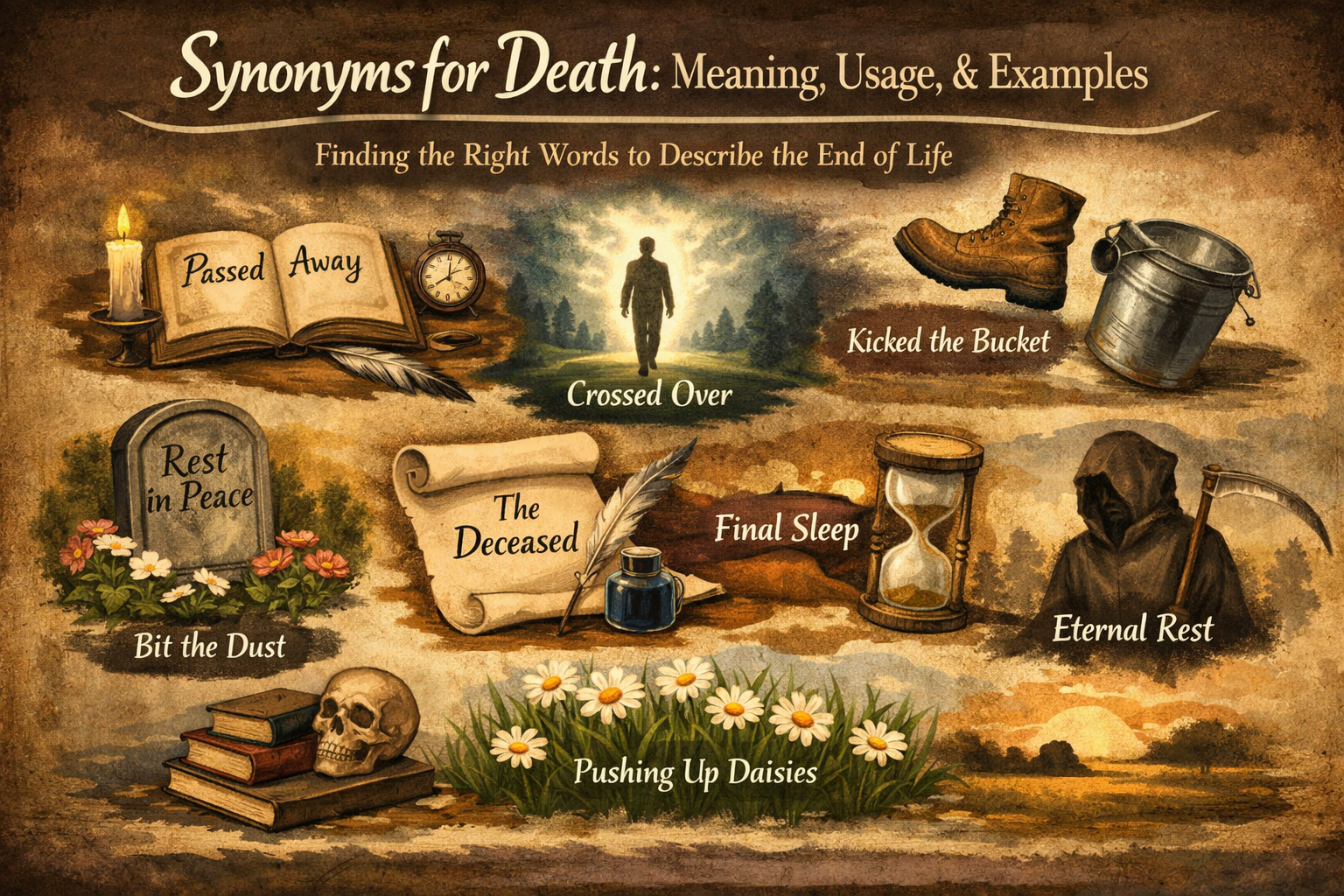
Language has a powerful way of shaping how we talk about life’s most serious topics. One such topic is death, which people often describe using softer, poetic, or indirect words. That’s why many writers, speakers, and everyday conversations rely on synonyms for death rather than repeating the same term again and again.
These alternative expressions help convey emotion, respect, cultural beliefs, or even humor depending on the situation. For example, in literature you might read phrases like “passed away,” while in casual speech someone might say “kicked the bucket.” Each synonym carries its own tone and meaning.
In this article, we’ll explore different synonyms for death, their meanings, and when they’re appropriate to use. Whether you’re a writer, student, or simply curious about language, understanding these variations can help you communicate more effectively and sensitively.
Common Synonyms for Death Used in Everyday Language
Many synonyms for death are used in daily conversations because they sound softer or more respectful than the direct word “death.” These expressions are often called euphemisms because they make difficult topics easier to discuss.
One of the most common phrases is “passed away.” It’s widely used in obituaries, news reports, and conversations when someone wants to speak about death in a respectful tone. Another frequently used expression is “departed,” which suggests that someone has left this world peacefully.
The phrase “gone” is also common in informal speech. People might say, “He’s gone,” to gently communicate that someone has died. Similarly, “rest in peace” is often used to express respect or remembrance after a person has died.
Other everyday synonyms include:
-
Perished
-
Deceased
-
No longer with us
-
Expired
-
Lost their life
Each of these phrases carries slightly different emotional weight. For example, “perished” is often used in tragic situations like accidents or disasters, while “deceased” is more formal and commonly found in legal or official contexts.
Using these softer alternatives can help people communicate compassionately, especially when discussing sensitive situations.
Formal and Professional Synonyms for Death
In formal writing, such as academic texts, medical reports, or legal documents, specific synonyms for death are used to maintain professionalism and clarity.
One of the most widely used formal terms is “deceased.” This word appears frequently in legal documents, death certificates, and official records. It sounds neutral and respectful without carrying emotional overtones.
Another formal synonym is “demise.” This term is often used in literature, journalism, and historical writing. For instance, a news article might say, “The sudden demise of the leader shocked the nation.”
Medical contexts often use the word “expired.” In hospitals, medical professionals sometimes use this term to describe the moment when a patient stops breathing or when life functions cease.
Other professional or formal alternatives include:
-
Fatality
-
Passing
-
Loss of life
-
Late (as in ‘the late Mr. Smith’)
-
Mortality
Each of these terms serves a different purpose depending on the context. For example, “fatality” is commonly used when discussing accidents or disasters, while “mortality” is often used in statistics or research studies.
Understanding these formal synonyms is particularly helpful for writers, journalists, and students who need to discuss death in a clear and respectful manner.
Literary and Poetic Synonyms for Death
Writers and poets often use creative language when describing death. Literary synonyms for death can make a story more emotional, dramatic, or symbolic.
One well-known poetic expression is “eternal rest.” This phrase suggests peace and calm after life ends. Another common literary phrase is “the final sleep,” which compares death to a long, peaceful sleep.
Authors sometimes use phrases like “crossed over” or “entered the afterlife.” These expressions often appear in spiritual or religious contexts and emphasize the idea that life continues in another form.
Some beautiful literary synonyms include:
-
The end of one’s days
-
Last breath
-
Final journey
-
Departed this world
-
Slipped away
These expressions are often used in novels, poems, and memorial speeches because they carry emotional depth. They allow writers to discuss death in a thoughtful and meaningful way rather than using blunt or harsh language.
For creative writers especially, using varied synonyms can add richness and subtlety to storytelling.
Informal and Humorous Synonyms for Death
While death is usually treated seriously, some cultures and conversations use humor or casual expressions to talk about it. These informal synonyms for death are often used jokingly or in lighthearted contexts.
A well-known slang phrase is “kicked the bucket.” This humorous expression has been used for centuries and often appears in movies, jokes, and everyday speech.
Another casual phrase is “croaked.” Though somewhat playful, it’s usually used among friends rather than in serious situations.
Other informal or humorous expressions include:
-
Bit the dust
-
Bought the farm
-
Checked out
-
Met their maker
-
Pushed up daisies
These phrases should be used carefully because they might sound disrespectful in serious conversations. However, in storytelling, comedy, or casual dialogue, they can add personality and humor.
Understanding the tone of these phrases helps ensure they’re used in appropriate situations.
Why Writers Use Different Synonyms for Death
There are several reasons why writers and speakers choose different synonyms for death instead of repeating the same word repeatedly.
First, variety improves readability. Repeating the word “death” multiple times in a text can sound repetitive. Using synonyms keeps the language fresh and engaging.
Second, tone matters. Different words create different emotional effects. For example, “passed away” sounds gentle, while “perished” sounds tragic.
Third, cultural and religious beliefs influence language. Some expressions reflect spiritual ideas about the afterlife, while others simply soften the harshness of the topic.
Finally, context determines the best word choice. In a formal document, “deceased” might be the correct term, while in a novel, a writer might choose a poetic phrase like “took their final breath.”
By understanding these nuances, writers can communicate more thoughtfully and effectively.
Conclusion
Talking about death is never easy, but language provides many ways to approach the topic with sensitivity and meaning. The many synonyms for death allow people to express grief, respect, humor, or poetic beauty depending on the situation. From formal words like “deceased” to literary expressions such as “eternal rest,” each term carries its own tone and purpose.
For writers and everyday speakers alike, knowing these alternatives helps create more thoughtful communication. Instead of repeating the same word, you can choose the synonym that best matches the context, emotion, or style you want to convey.
FAQs
What are common synonyms for death?
Common synonyms include passed away, deceased, demise, perished, expired, and loss of life.
Why do people use synonyms for death?
People use them to soften the topic, show respect, avoid repetition, or match the tone of a conversation or piece of writing.
What is the most respectful synonym for death?
“Passed away” and “deceased” are considered among the most respectful and widely accepted expressions.
Are humorous synonyms for death appropriate?
They can be used in casual or comedic contexts, but they may be inappropriate in serious or sensitive situations.
What synonyms for death are commonly used in literature?
Literary expressions include eternal rest, final sleep, last breath, and slipped away.