
Introduction
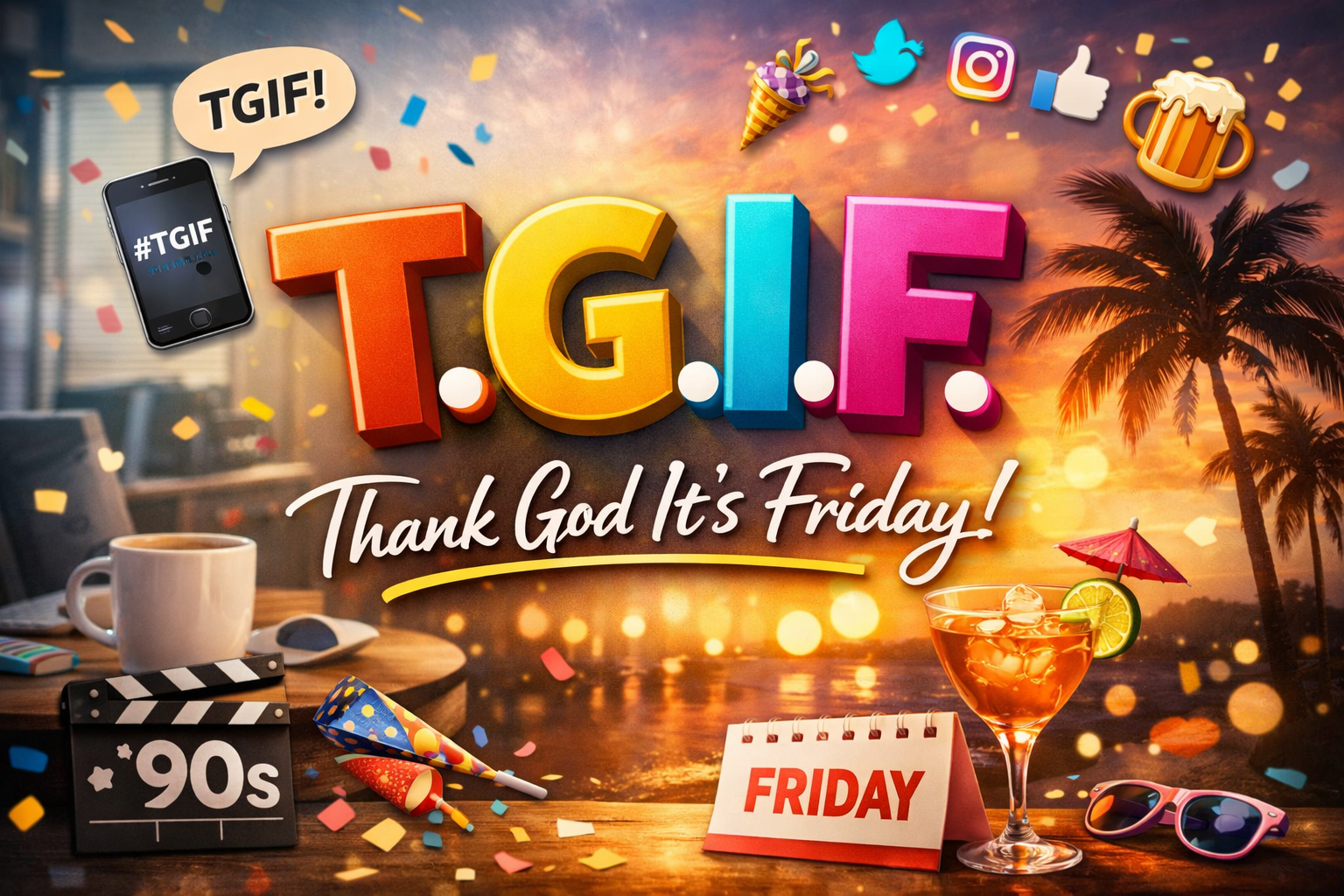
If you’ve ever seen someone post “TGIF!” on social media or send it in a text message, you might have wondered what it actually means. The t.g.i.f. meaning is simple yet powerful—it stands for “Thank God It’s Friday.” People use this phrase to express excitement that the workweek is finally ending and the weekend is about to begin.
For many workers and students, Friday represents freedom from deadlines, classes, and busy schedules. That’s why the phrase has become a popular expression of relief and happiness. Over time, “TGIF” has moved beyond offices and classrooms into everyday online conversations, memes, and hashtags. In this article, we’ll explore the meaning of TGIF, where it came from, how people use it today, and why it remains such a widely loved phrase.
What Does T.G.I.F. Mean?
The t.g.i.f. meaning is straightforward: it stands for “Thank God It’s Friday.” It’s an expression people use to celebrate the arrival of Friday and the end of a busy work or school week.
For most people, Monday through Thursday are filled with responsibilities—jobs, meetings, assignments, and daily routines. By the time Friday arrives, many feel relieved because the weekend is just around the corner. Saying “TGIF” captures that feeling of excitement and relaxation.
People often use the phrase in casual situations such as:
-
Text messages
-
Social media posts
-
Workplace conversations
-
Emails between colleagues
For example, someone might say:
-
“TGIF! I can’t wait to relax this weekend.”
-
“Finally finished the project—TGIF!”
-
“Long week, but TGIF!”
Although the phrase includes the word “God,” many people use it simply as an expression of gratitude or relief rather than a religious statement. It’s become a cultural phrase that represents happiness about the weekend.
Today, TGIF is so common that it’s often written without periods (TGIF) and understood instantly around the world.
The Origin and History of TGIF
The phrase “Thank God It’s Friday” became popular in the 1960s and 1970s in the United States. During this period, office culture was growing rapidly, and many employees worked traditional Monday-to-Friday schedules. Friday symbolized the end of the workweek and the beginning of personal time.
One of the biggest boosts to the phrase came from pop culture. In 1978, the movie Thank God It’s Friday was released, which helped spread the phrase even further. Later, the term became associated with television programming as well. In the 1990s, a popular block of family sitcoms aired on Friday nights under the banner “TGIF,” making the phrase even more recognizable.
Businesses also adopted the phrase. Restaurants and bars started using TGIF promotions to attract customers celebrating the start of the weekend. One famous example is the restaurant chain TGI Fridays, which built its entire brand around the excitement of Friday.
Over time, the phrase moved from advertising and entertainment into everyday speech. Today, it’s a universal way to celebrate the approaching weekend.
How TGIF Is Used in Texting and Social Media
In the digital age, the t.g.i.f. meaning has become even more popular thanks to texting, messaging apps, and social media platforms. People frequently use the acronym to share their excitement about Friday.
On social media platforms like Instagram, X (Twitter), and Facebook, users often post messages such as:
-
“TGIF vibes!”
-
“Coffee in hand and TGIF energy.”
-
“TGIF! What are your weekend plans?”
The phrase is often paired with emojis like:
-
🎉 (celebration)
-
🍹 (relaxation)
-
😌 (relief)
Many companies and brands also use TGIF in marketing campaigns. For example, clothing stores, restaurants, and travel companies may post Friday deals using hashtags like:
-
#TGIF
-
#FridayFeeling
-
#WeekendVibes
In texting conversations, the acronym keeps messages short and informal. Instead of writing a long sentence about being happy it’s Friday, people simply type “TGIF,” and everyone understands the message instantly.
Why People Love Saying TGIF
There’s a reason the phrase has stayed popular for decades—it reflects a shared human experience. Most people look forward to the weekend, and TGIF captures that feeling perfectly.
Here are a few reasons why people love using it:
It Celebrates the End of the Workweek
After several days of work or school, Friday feels like a reward. Saying TGIF acknowledges that sense of accomplishment.
It Signals Relaxation Time
Weekends are often associated with rest, hobbies, and spending time with family or friends. The phrase marks the transition from work mode to relaxation.
It Builds Social Connection
When coworkers or friends say TGIF together, it creates a sense of shared relief and excitement.
It’s Quick and Easy
Acronyms are popular in digital communication because they save time. TGIF communicates a full idea in just four letters.
Because of these reasons, the phrase remains a staple in everyday language, especially on Fridays when people feel the week’s stress melting away.
Similar Phrases and Alternatives to TGIF
Although TGIF is widely used, there are other phrases people use to celebrate the end of the week. These expressions carry similar meanings but may appear in different contexts.
“Happy Friday”
A friendly greeting often used in offices and online posts.
“Weekend at last”
This phrase expresses relief that the weekend has finally arrived.
“Friday feeling”
Popular on social media to describe the excitement people feel on Fridays.
“Finally Friday”
Another casual way to celebrate the end of the workweek.
“Fri-yay”
A playful version of Friday that emphasizes excitement.
These alternatives show how language evolves to reflect the same joyful idea—celebrating the beginning of the weekend.
Conclusion
The t.g.i.f. meaning may be simple, but the phrase carries a lot of positive emotion. Standing for “Thank God It’s Friday,” it reflects the happiness people feel when the workweek comes to an end and the weekend begins. Over the years, TGIF has grown from a casual expression into a widely recognized cultural phrase used in conversations, marketing, and social media.
Whether you’re sending a quick text to a friend, posting online, or chatting with coworkers, saying TGIF is a fun way to share your excitement about Friday. It reminds us that after a busy week, everyone deserves a little time to relax and recharge.
FAQs
What does TGIF mean in texting?
TGIF means “Thank God It’s Friday.” In texting, it expresses happiness that the weekend is about to begin.
Is TGIF a formal phrase?
No, TGIF is considered informal slang. It’s commonly used in casual conversations, texts, and social media posts.
Do people still use TGIF today?
Yes. Despite being decades old, the phrase remains very popular online and in everyday conversation.
Is TGIF always religious?
Not necessarily. While the phrase includes the word “God,” most people use it simply as a cultural expression of relief that it’s Friday.
Can TGIF be used in work emails?
It’s best used in casual workplace communication. In formal business emails, it may not always be appropriate.
 admin
admin