
Introduction
Language becomes far more flavorful when it borrows from food, and that’s exactly where food similes shine. These vivid comparisons use familiar tastes, textures, and dishes to describe emotions, appearances, and situations in a way that feels instantly relatable. Whether someone is “as sweet as honey” or “cold as ice cream,” food similes turn abstract ideas into something you can almost taste. They’re commonly used in storytelling, poetry, casual conversation, and even marketing because they connect quickly with readers. In this article, you’ll explore what food similes are, why they’re so effective, and how to use them naturally. By the end, you’ll not only recognize food similes everywhere—you’ll know how to sprinkle them into your own writing with confidence.
What Are Food Similes?
Food similes are figures of speech that compare one thing to food using words like “as” or “like.” They help describe qualities such as taste, texture, speed, personality, or mood by linking them to something everyone understands—food. Since food is a universal experience, these similes feel intuitive and memorable.
For example, saying someone is “as busy as a popcorn machine” immediately creates a lively mental image. Food similes often highlight sweetness, bitterness, softness, hardness, or heat. They work especially well because food triggers the senses, making language more vivid and engaging.
Writers frequently rely on food similes to make descriptions more concrete. Instead of saying a person is kind, you might say they’re “as warm as freshly baked bread.” That single phrase communicates comfort, warmth, and familiarity all at once.
In everyday speech, food similes slip in naturally. People use them without even realizing it—phrases like “cool as a cucumber” or “easy as pie” are so common they feel almost literal. Yet they’re powerful tools that turn plain sentences into expressive ones.
Popular Food Similes and Their Meanings
Some food similes have become so popular that they’re instantly recognizable. These expressions often cross cultures and generations because the foods they reference are universally known.
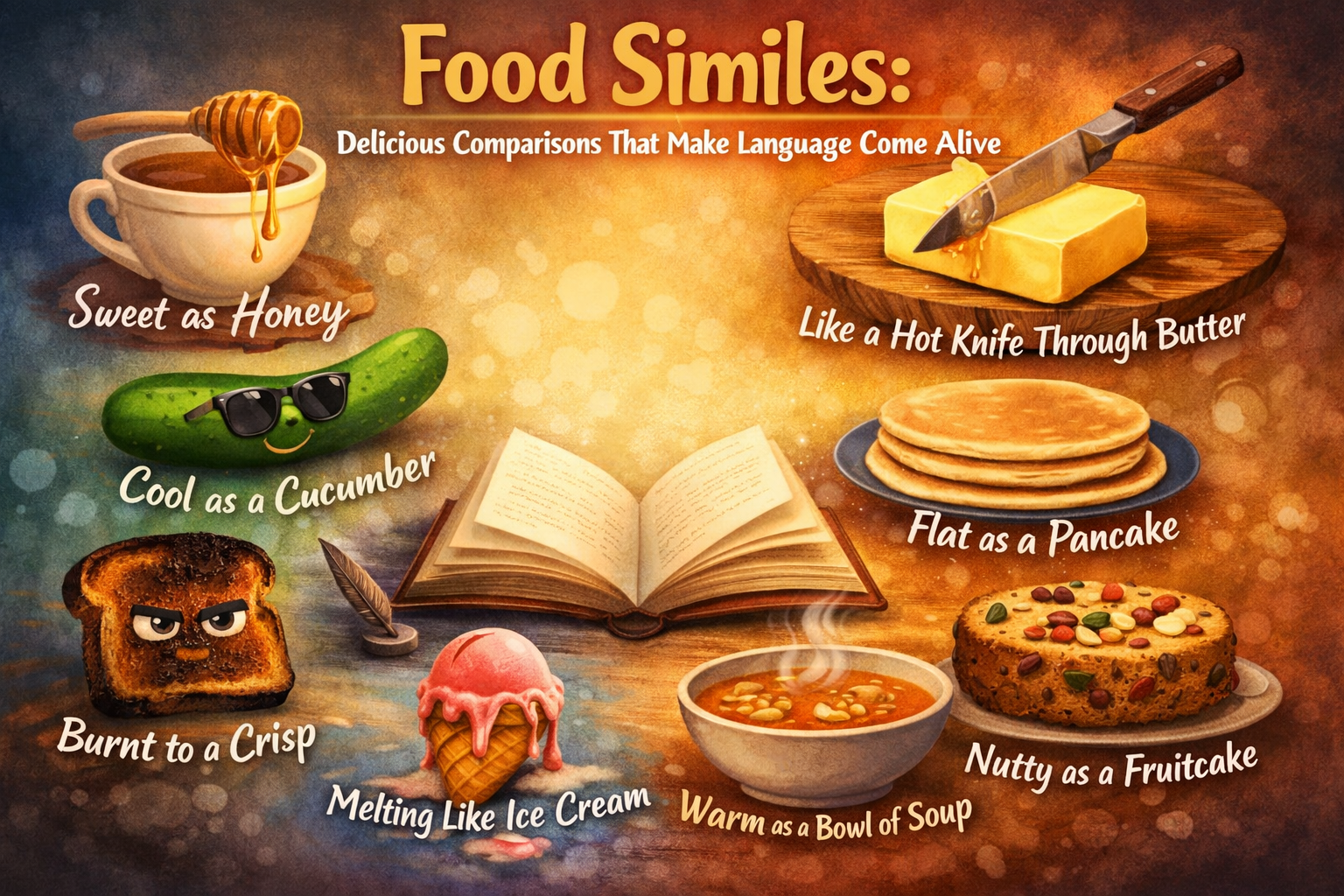
“As sweet as honey” is commonly used to describe a person with a gentle, kind nature. Honey’s natural sweetness makes it a perfect comparison for warmth and affection. Similarly, “cool as a cucumber” describes someone who remains calm under pressure, reflecting the refreshing quality of cucumbers.
Other examples lean toward humor or exaggeration. “Like a hot knife through butter” suggests something happening with extreme ease. “As flat as a pancake” paints a clear picture of something completely level or lifeless. Meanwhile, “as nutty as a fruitcake” playfully describes eccentric behavior.
Food similes can also express negativity. “Bitter as lemon” refers to sharp disappointment, while “stale as old bread” suggests boredom or lack of originality. These expressions help communicate emotions quickly, without lengthy explanations.
Because these similes are so visual and sensory, they stick in the listener’s mind, making communication clearer and more engaging.
Food Similes in Writing and Storytelling
In creative writing, food similes add richness and depth. Authors often use them to create atmosphere, reveal character traits, or enhance emotional scenes. A character described as having a voice “smooth like melted chocolate” instantly feels soothing and attractive to the reader.
Food similes are especially effective in descriptive passages. Comparing silence to “thick gravy” makes it feel heavy and uncomfortable. Describing tension as “tight as an overbaked crust” creates a sense of pressure without explicitly stating it.
They also help balance serious moments with warmth or humor. A stressful scene can feel more relatable when described with familiar food imagery. Readers connect more easily because food is part of everyday life.
In poetry, food similes appeal to the senses. They invite readers to taste, smell, and feel the words. This sensory connection makes writing more immersive and memorable.
Used sparingly and creatively, food similes can elevate storytelling, turning ordinary descriptions into vivid, emotionally resonant moments.
Using Food Similes in Everyday Conversation
Food similes aren’t just for writers—they’re everywhere in daily speech. People naturally use them to explain feelings, reactions, and situations quickly. Saying something was “easy as pie” instantly communicates effortlessness without further explanation.
They’re also great for adding personality to conversations. Calling someone “as spicy as chili” suggests boldness and energy, while “soft like butter” can describe both texture and temperament. These expressions make speech more colorful and engaging.
In casual settings, food similes often add humor. Saying your phone battery died “faster than melting ice cream” feels playful yet clear. In professional environments, they can make communication friendlier—when used appropriately.
The key is context. Some food similes work well in informal conversations, while others fit storytelling or teaching better. When chosen carefully, they help ideas land faster and feel more relatable.
How to Create Your Own Food Similes
Creating original food similes isn’t difficult once you start thinking sensory-first. Begin by identifying the quality you want to describe—sweetness, speed, heaviness, sharpness, or comfort. Then match it with a food that naturally represents that trait.
For instance, if you want to describe someone energetic, you might compare them to “fizzing soda.” To show comfort, “warm soup on a cold night” works beautifully. The more familiar the food, the stronger the connection will be for your audience.
Original food similes feel fresh because they avoid clichés. Instead of “sweet as sugar,” you could say “sweet like ripe mango.” That small twist adds originality while keeping the meaning clear.
Pay attention to cultural relevance as well. Foods that your audience recognizes will make the simile more effective. When done right, your custom food similes will feel natural, expressive, and memorable.
Conclusion
Food similes add flavor, emotion, and clarity to language by connecting ideas with familiar tastes and textures. Whether used in writing, conversation, or storytelling, they help turn ordinary descriptions into vivid images that linger in the mind. From classic expressions to creative new comparisons, food similes make communication warmer, more engaging, and easier to understand. When used thoughtfully, they don’t just decorate language—they enhance meaning. By recognizing and practicing them, you can make your words more expressive and enjoyable for any audience.
FAQs About Food Similes
What are food similes?
Food similes are comparisons that use food to describe qualities, emotions, or situations using words like “as” or “like.”
Why are food similes so effective?
They’re effective because food is universally familiar and sensory, making descriptions easy to imagine and remember.
Are food similes used in formal writing?
Yes, when used carefully. They can add warmth and clarity even in essays, speeches, and professional writing.
Can I create my own food similes?
Absolutely. Focus on sensory qualities and choose foods your audience will recognize and relate to.
What’s the difference between a food simile and a metaphor?
A simile uses “like” or “as,” while a metaphor directly states the comparison without those words.
 Ayesha Hussain