
Introduction
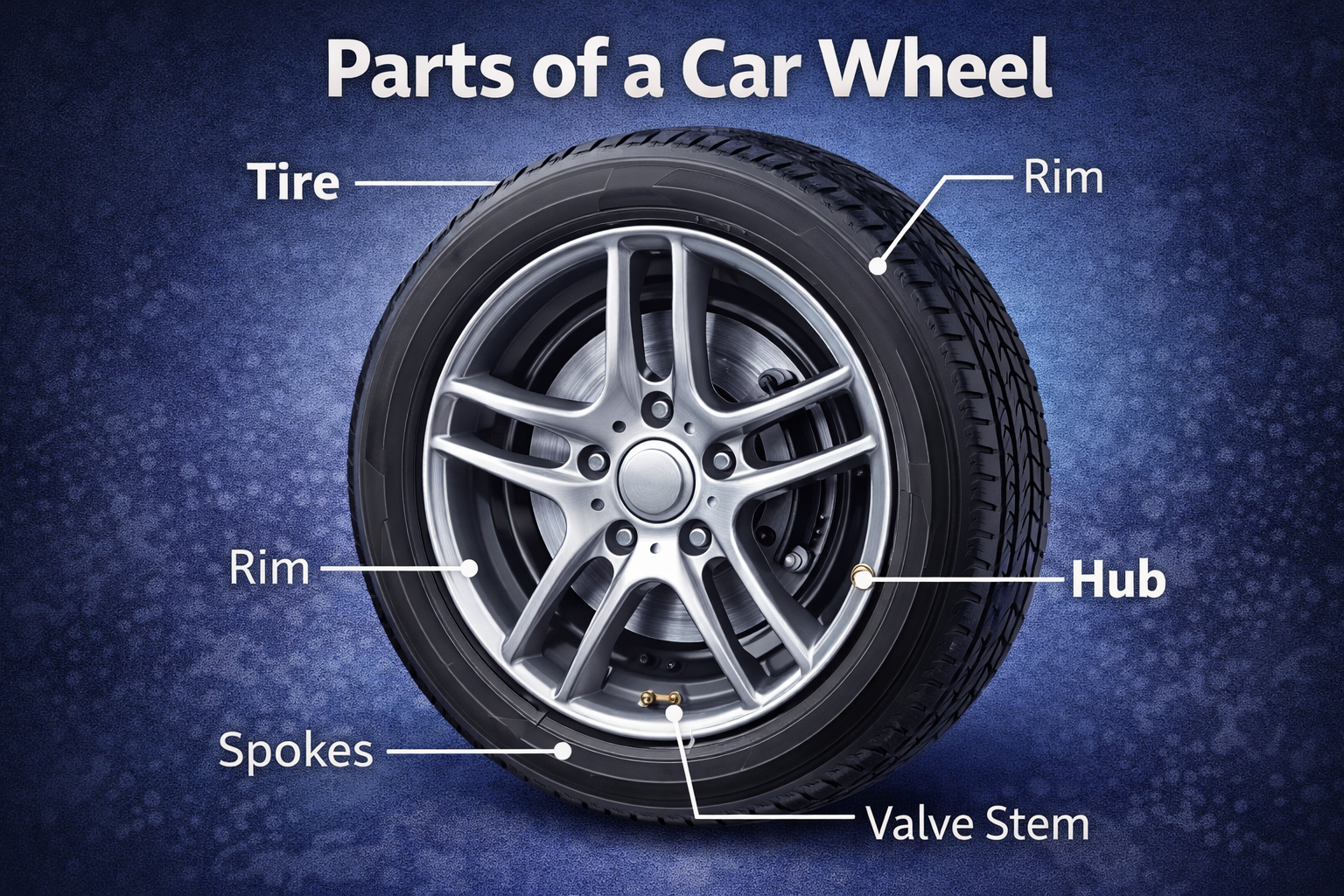
If you’ve ever looked at your vehicle and wondered how it actually moves so smoothly, the answer lies in understanding the parts of a car wheel. While it may seem like a simple round object, a car wheel is made up of several important components that work together to ensure safety, performance, and comfort. Whether you’re a new driver or just curious about how things work, learning about these parts can help you take better care of your vehicle. In this guide, we’ll break everything down in easy language so you can clearly understand each component and its role.
The Tire: The Outer Layer That Meets the Road
The tire is the most visible and important part of a car wheel. It’s the rubber outer layer that directly touches the road and provides grip. Without a good tire, your car wouldn’t be able to move safely.
Tires are designed to handle different road conditions, whether it’s dry roads, wet surfaces, or even rough terrain. The patterns on the tire, known as tread, play a huge role in maintaining traction. Deeper treads help channel water away and prevent slipping.
Inside the tire, there are layers of materials like rubber, fabric, and steel that give it strength and flexibility. These layers allow the tire to support the vehicle’s weight while absorbing shocks from bumps on the road.
Proper tire maintenance is essential. Keeping the right air pressure, checking tread wear, and rotating tires regularly can extend their lifespan and improve performance.
In simple terms, the tire is what connects your car to the road, making it one of the most critical parts of a car wheel.
The Rim: The Structural Base of the Wheel
The rim is the solid outer edge of the wheel that holds the tire in place. It’s usually made of metal, such as steel or aluminum, and provides the structure needed to support the tire.
Rims come in different sizes and designs, and they play both a functional and aesthetic role. While they help keep the tire securely mounted, they also contribute to the overall look of the vehicle.
One important function of the rim is maintaining the shape of the tire. It ensures that the tire stays properly fitted, even when the vehicle is moving at high speeds.
Rims also help with heat dissipation. When you drive, friction generates heat, and the rim helps distribute that heat to prevent damage.
Choosing the right rim size is important. If the rim is too big or too small, it can affect handling, comfort, and even fuel efficiency.
Overall, the rim acts as the backbone of the wheel, providing support and stability.
The Hub: The Center Connection Point
The hub is the central part of the wheel that connects it to the car. It plays a crucial role in allowing the wheel to rotate smoothly.
Inside the hub, you’ll find components like wheel bearings. These bearings reduce friction and ensure that the wheel spins freely. Without them, driving would be rough and inefficient.
The hub is attached to the axle, which transfers power from the engine to the wheels. This connection is what makes the car move forward or backward.
Another important feature of the hub is the bolt pattern. This determines how the wheel is attached to the vehicle. Each car has a specific pattern, so it’s important to match it correctly when replacing wheels.
Because the hub handles so much stress, it needs to be strong and durable. Regular inspection can help detect issues early and prevent bigger problems.
In short, the hub is the heart of the wheel, connecting everything together and ensuring smooth movement.
The Spokes: Supporting Strength and Design
Spokes are the parts that connect the rim to the hub. They play a key role in distributing weight and providing structural support.
In modern cars, spokes are usually part of a solid wheel design rather than separate pieces. They are carefully engineered to handle the pressure and weight of the vehicle while maintaining balance.
Spokes also contribute to the overall appearance of the wheel. Different designs can give a car a sporty, elegant, or rugged look. That’s why many car owners pay attention to spoke design when choosing wheels.
Functionally, spokes help absorb and distribute forces during driving. Whether you’re turning, braking, or driving on uneven roads, spokes ensure that the wheel remains stable.
Strong and well-designed spokes can improve performance and durability. However, damaged spokes can lead to imbalance and unsafe driving conditions.
So, while they may seem like a design element, spokes are actually an essential part of a car wheel.
The Valve Stem: Small but Essential
The valve stem might be small, but it plays a very important role. It’s the part where you add air to the tire and maintain proper pressure.
Located on the rim, the valve stem allows air to enter the tire while preventing it from escaping. It has a small cap that keeps dirt and moisture out.
Maintaining correct tire pressure is crucial for safety and performance. Too much or too little air can affect handling, fuel efficiency, and tire lifespan. The valve stem is what makes it possible to adjust this pressure.
Sometimes, valve stems can wear out or get damaged. If this happens, air may leak, causing the tire to lose pressure. Regular checks can help prevent this issue.
Despite its size, the valve stem is a key component that ensures your tires function properly.
Conclusion
Understanding the parts of a car wheel helps you appreciate how each component works together to keep your vehicle moving safely and smoothly. From the tire that grips the road to the hub that connects everything, every part has an important role. By learning about these components, you’ll be better equipped to maintain your car and spot potential issues early. Whether you’re a driver or simply curious, knowing the parts of a car wheel is a valuable piece of knowledge that can improve both safety and performance.
FAQs
What are the main parts of a car wheel?
The main parts include the tire, rim, hub, spokes, and valve stem.
Why is tire pressure important?
It affects safety, fuel efficiency, and tire lifespan.
What does the hub do?
It connects the wheel to the car and allows it to rotate smoothly.
Can damaged spokes affect driving?
Yes, they can cause imbalance and reduce safety.
How often should I check my tires?
It’s best to check tire pressure and condition regularly, at least once a month.
 admin
admin